
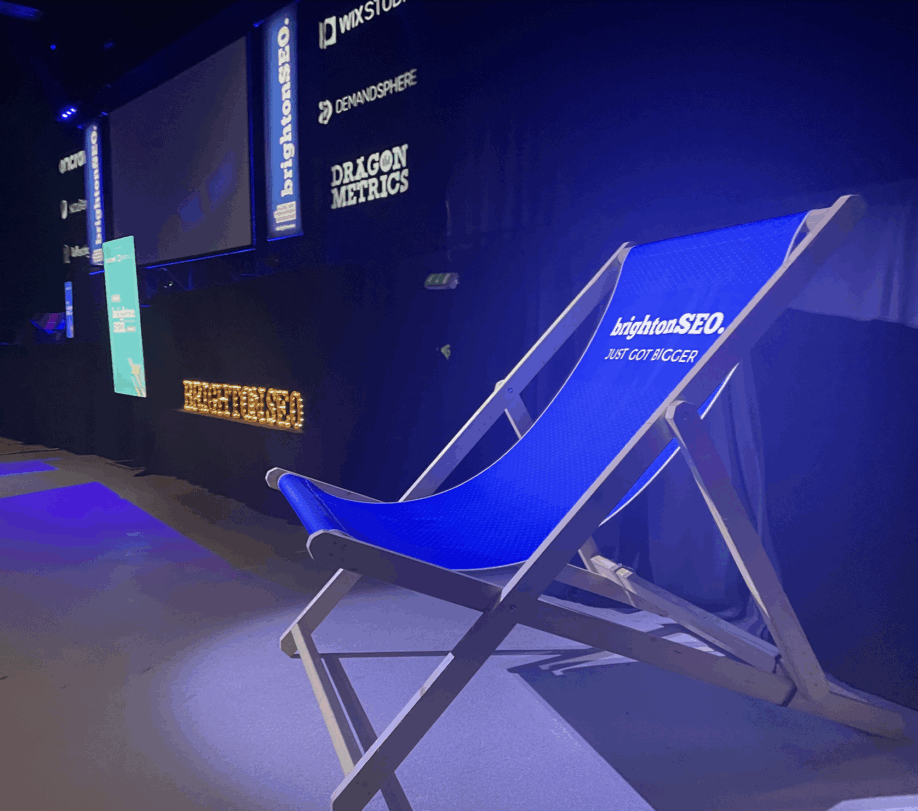
I’ve been coming to the BrightonSEO conference since the second edition, and the October 2025 event was possibly the most useful I have ever attended. Chiefly, because we all need to keep up to date with AI search*. As a B2B tech content strategist and copywriter, I am particularly keen to understand how content creators and copywriters need to adapt to the latest thinking around large language models (LLMs).
Writing to rank on LLMs
Two schools of thought emerged from the presentations I watched and the roundtables I took part in. One was how to use AI as an assistant to write copy, but not to create content intended for publication, while the other was how to use AI to write like your brand for your target personas. I fall into the first camp; per my recent post around a PRmoment webinar, having a human write content can help you stand out now from the AI slop, because:
- Some media do not like AI-created content, PA Media, for example
- AI tools can spot other AI-generated content, so will they discount it from appearing in LLMs?
I thoroughly recommend watching Samanyou Garg from Writesonic’s talk, if you have access to BrightonSEO’s videos (paywall). He covered the three key pillars of ranking on LLMs:
- Off-page: The most important, valued six times more than owned/on-page content. This is why PR is so vital to earn media coverage
- On-page: Your own content. Garg highlighted that formats such as listicles, comparison pieces, data studies, FAQs and competitor reviews perform well
- Technical aspects: SEO basics on your website, such as metatags, are still important, as are avoiding 404s etc., so sort your internal linking out
Garg says that the first 100 words of a page get 80% of an LLM’s attention, so get your key messages and key facts in early! Also, 65% of pages surfaced in LLMs are less than a year old, so update regularly, potentially including a recent date.
Your website’s home page and product pages are very important, and you should use the brand name for recognition rather than ‘we’. This is a really interesting change from first to third person, as typically one wants to feel friendly and personal in brand copy.
Developing your writing with a custom GPT
Another valuable talk was Silke Vanbeselaere’s from Navigator International. Her presentation looked at how to build a custom GPT that thinks and writes like your brand. This is great to ensure brand consistency across your content and build custom personas that match your brand voice. I imagine you could also create personas to test your content against and hone it before you go public.
To build your custom GPT, Vanbeselaere recommends uploading as many brand guidelines and examples as possible, bearing in mind you have an 8,000-character limit in ChatGPT.
She then covered the eight elements you need to instruct the GPT:
- Structural outline
- Thought development
- Paragraph design
- Hook technique
- Tone balance
- Syntax (sentence structure)
- Stylistic breaks (pattern interruptions)
- Brand quirks
Make sure you include examples of all of them: What does the brand voice look like in an email, article, Instagram post etc.? You can create your dream spokesperson with a blend of several real-world examples to create a unique persona (note: do NOT imitate a single individual, for obvious reasons, rather seek inspiration from various to use as examples). She also covered other key factors, like framework, empathy mapping, archetype, and interaction style.
Where to start with copywriting for LLMs
Just some thoughts from me to finish up. Before you do any of the above, you need to know where you stand on LLMs, how your competitors are performing, and what queries your audience is asking of their AI tools. So, start with an audit.
Some basic free tools to check your LLM performance include Hubspot’s Answer Engine Optimization Grader, and make sure you have a holistic view of search, so check your GA4 data for click-throughs from LLMs; that should be a metric now. You can always run basic searches on LLMs, picking a few terms relevant to your brand, to see what surfaces in the main LLMs.
I will post again soon on how the rise of AI search impacts public relations, but in the meantime, please read my piece for the CIPR Crisis Network on LLMs and reputation management.
*I noted a certain disdain for the term ‘GEO’ (Generative Engine Optimisation) at BrightonSEO, so I am going to stick with AI search or AIO (AI Optimisation).
If you’d like to discuss what LLMs mean for your content strategy or need a B2B tech copywriter, please drop me an email.
