
‘Show, don’t tell’ is a vital concept when informing and persuading audiences. In an era when decision-makers are increasingly turning to large language models (LLMs) to discover and evaluate service providers, case studies have never been more important.
The PR value of case studies
People can spot spin a mile off. What they really want to see is people like them who face the same challenges and understand how they overcame their challenges. The customer’s endorsement is a key, neutral proof that you’re a trustworthy partner and that your service or product delivers on its promise.
Case studies, whether written or video, are key persuasive content assets in the decision journey. They’re ‘mid-funnel’, so a potential customer may have heard about your brand and is assessing your viability for their needs, so they will want to see evidence of the value you deliver in the form of a proof point, like a case study.
In the era of LLMs, customer case studies are essential owned content. LLMs and ‘traditional’ search engines alike look for ‘EEAT’ content: Experience, Expertise, Authoritativeness and Trustworthiness. Case studies straddle all these groups. Read this post for more on AI search and the role of PR content.
The challenge of getting customer case studies and how to solve it
I’ve been agency-side most of my career and have seen the frustrations that in-house comms leads face when trying to get hold of customer case studies. Sometimes, customers don’t want to talk or there are sensitivities (especially in cybersecurity).
Anonymous case studies are not ideal, but better than nothing. You can use ambiguous language to avoiding naming the customer directly, such as “a well-known insurance provider”.
So, who has access to customers? Sales teams and customer services. What really works is when the communications team educates sales teams about the value of PR and customer case studies and explains clearly what they need to open a pipeline of customer content.
Once you’ve got your customer case study out in the public domain, shout about it! Get it out there on LinkedIn and other social media. Empower sales teams to use them in their new business conversations.
The customer case study story arc
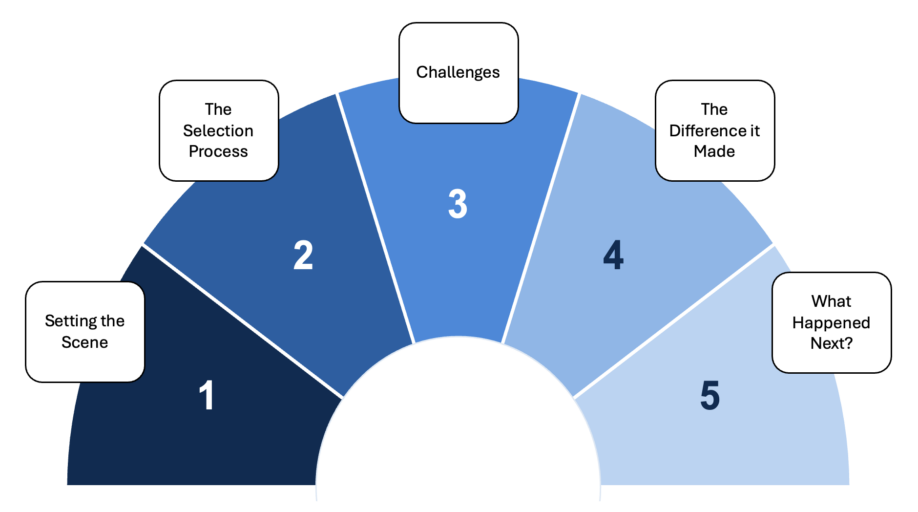
There is an art to brand storytelling, and customer case studies follow an arc:
1) Set the scene
What was the initial problem that needed solving? What was the existing process/technology, why wasn’t it working, and what was the cost to the business?
2) What was the customer selection process?
How did the customer come to hear of and select the service provider? What did they implement, what was the process?
3) What challenges did the customer face?
What challenges did the customer face during implementation, and how did the client help them overcome them?
4) What difference has the solution made?
What difference has the solution made to staff, productivity, efficiency and profitability (in that order)? Are there any stats you can use? (e.g. “we saved 25% on previous costs”, “we can now do this in half the time”, etc.)
5) What happens next?
What future plans does the customer have, and what advice would they give other people in their position? Most brands stop at step 4, but this extra step demonstrates the longevity and strength of the relationship.
Are you ready to discuss your customer case study requirements?
Case studies are essential marketing assets in the age of AI search (GEO/AEO), as LLMs become the main channel through which customers engage with brands.
At Eight Moon Media, we’ve written hundreds of customer case studies over the years that engage, inform, and persuade audiences. Whether intended for your website or for press use, we can craft expert customer case studies for you.
Please get in touch if you need help bringing your customer case studies to life.